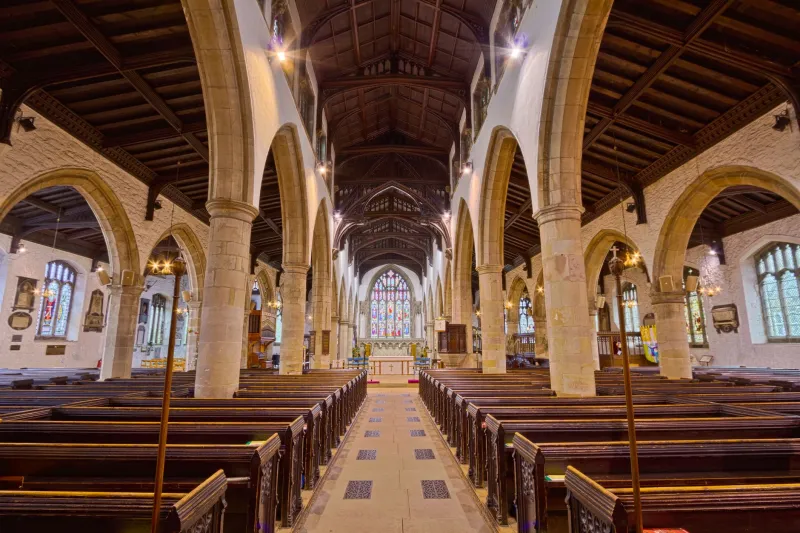
The Village You Didn't Quite Come Home To: Notes on Ancestral Returns
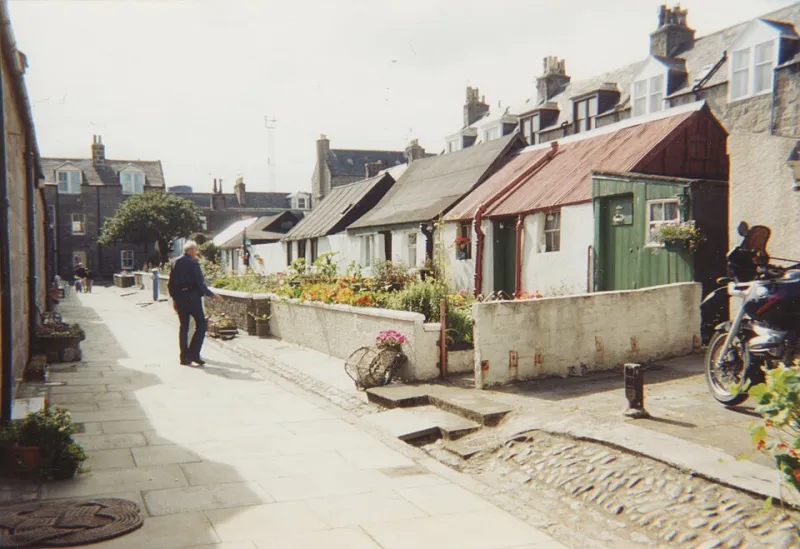
Photo: Libasstref, CC0, via Wikimedia Commons
My great-great-grandfather was a fisherman on a stretch of the Scottish coast I had only seen on old maps. I knew the village name from a marriage certificate, and for years I carried it around like a postcard in my head: a harbour, a few stone houses, a church with a crooked gravestone and perhaps a distant cousin who would look at my face and say, 'Aye, you've got the family look.'
When I finally went, the harbour was there. The herring were not. The street I had imagined as a row of fisher cottages was partly a car park. The church was locked. And the cousin, if he existed, was probably in Glasgow or Ontario or simply not interested in a stranger with a notebook.
The fantasy of arrival
Ancestral travel is built on a quiet fiction. We tell ourselves that the place will recognise us. That the past will fold into the present like a letter. That we will stand on a quayside and feel a click of belonging, as if a key has turned in a lock we did not know was there.
Sometimes that happens. But more often, the village is just a village on a wet Tuesday. The shop sells crisps and firelighters. The bus timetable is baffling. The graveyard is overgrown. The family name on the war memorial belongs to someone else's branch. None of this is a failure of the trip. It is simply the trip.
What heritage travellers actually find
I have spoken to people who have made these journeys, and the pattern repeats. A retired teacher from Bristol went looking for her Lincolnshire grandmother's chapel and found it converted into flats. A man from south London traced a great-grandfather to a Welsh mining village and discovered that the rows of terraces had been flattened and replaced by a bypass. A couple from Manchester drove to a Yorkshire hamlet expecting a family farm and found a holiday let with a hot tub.
Almost everyone described the same gap: the gap between the map and the feeling. The place had changed. The records had changed. The family had changed. And yet the journey was still worth making, because it replaced a fantasy with a fact. The fact was messier, but it was real.
Ambivalence is not failure
There is a pressure in family history to resolve things. To find the missing link. To stand in the church where they were baptised and feel that the story is now complete. But origin journeys are not puzzles with a single answer. They are conversations with people who cannot reply.
The most rewarding trips I have made are the ones where I stopped asking the place to give me closure and started asking it for context. Why did the family leave? What work was available? Who stayed? What did the village look like before the bypass, the holiday let, the car park? Those questions do not produce a neat ending. They produce a better map.
Travel with unfinished business
If you are planning an ancestral visit, go with a notebook rather than a script. Spend longer in the churchyard than you think you need to. Talk to the person in the village shop. Ask what has changed, not just what has stayed the same. Take photographs of ordinary things: a gate, a wall, a bus stop, a view from the end of the street. Those are the things your ancestors would recognise.
And leave room for the unphotogenic. The best moments are often not the ones you planned. A woman in a café who remembers your family name. A neighbour who points you towards a field path. A stone that is too worn to read but still has a shape you can trace with your finger.
A better kind of homecoming
The village did not give me closure. It gave me a sense of scale. My great-great-grandfather was not a character in a story; he was a man who walked to work in the dark and worried about the weather. The place did not need to recognise me. I needed to recognise it.
That is okay. In fact, it may be the point. Origin journeys are not about proving that we belong somewhere. They are about understanding how we got here, with all the gaps and wrong turns and unanswered questions that involves. The homecoming myth says the past will welcome us back. The reality is stranger and more interesting: the past is a place we visit, not a place we can move into.
And if you leave with more questions than you arrived with, you have probably done it right.