No Plaque Required: Making a Heritage Day Out of an Ordinary Life
Photo: Dosseman, CC BY-SA 4.0, via Wikimedia Commons
There is a particular kind of ancestry television moment that has become familiar. A researcher opens a leather folder. A church window glows. Someone whispers that the family name goes back to a castle, a crusader or a scandal. It makes good television. It is also, for most of us, not the story.
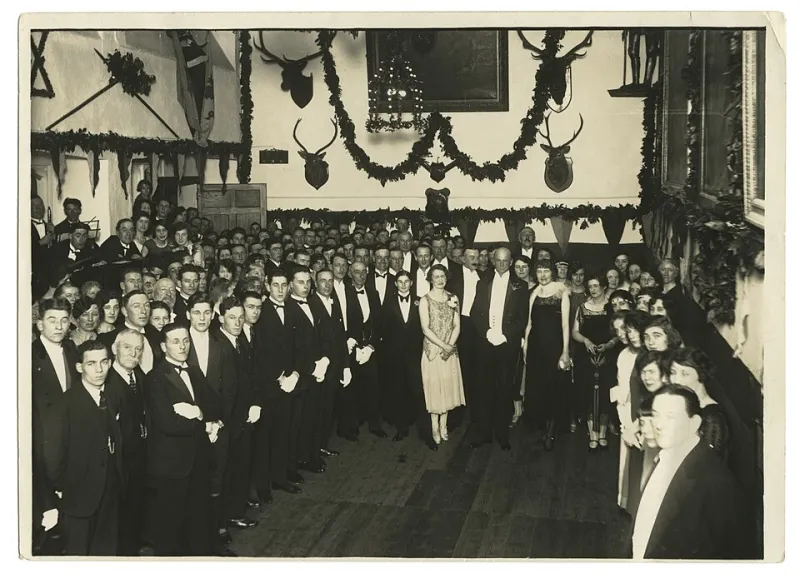
Most family trees are full of people who rented rather than owned, who worked in mills and mines and shops, who queued at the butcher, dug allotments, walked to the bus stop and got by. Their lives were not less interesting. They were simply ordinary - and ordinary is where most of British family history actually lives.
In 2026, ancestry travel is a growing hobby, and it is easy to feel that a trip only counts if it ends at a stately home or a surname in a stained-glass window. It does not. Sometimes the most honest heritage day is a bus ride to a terraced street, a look at the old corner shop, and a slow walk past the allotments.
The tyranny of the remarkable
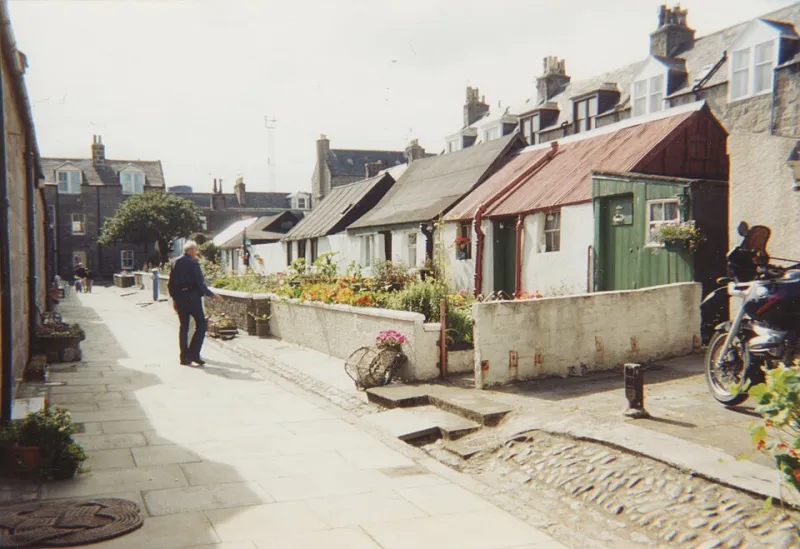
Grand houses are curated for visitors. That is their job. They show you the parlour, the kitchen, the servants' quarters, and they tell a story that has been polished for public consumption. Ordinary places do not do that. A terraced street in Bolton or Barry, a corner shop in Leeds, a allotment in Sheffield: these are not heritage attractions. They are neighbourhoods, workplaces and homes. That is exactly why they can feel more truthful.
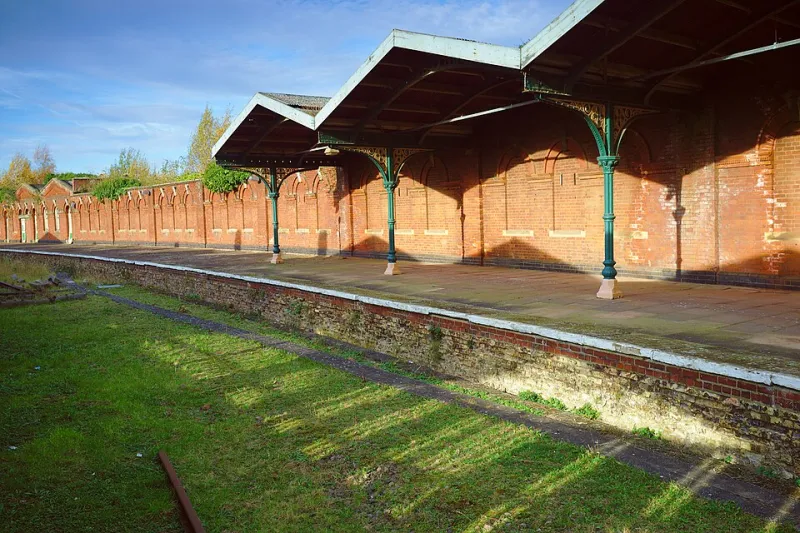
If your ancestor was a railway porter, a seamstress, a clerk, a miner, a shop assistant or a domestic servant, the places that shaped their life may be unremarkable to everyone else. But they are not unremarkable to you. The humble heritage day is not a consolation prize. It is a way of taking ordinary lives seriously.
Plan around an anchor, not a highlight
Start with one person and one ordinary anchor. It might be a home address, a workplace, a school, a place of worship, an allotment, a pub, a market or a bus route. You do not need to cover a whole town. You need one life, seen at ground level.
Use the census returns from 1841 to 1921, the 1939 Register, electoral rolls, trade directories and local newspapers to build a short list of addresses. Then put three or four stops within a walkable loop or along one bus route. If your ancestor took the bus to work, take the bus. If they walked to the factory gate, walk the same way. The point is not to tick off sites but to feel the scale of a life.
Check current public transport and opening times before you go. Carry an old map and a modern one. Build in a sit-down: a café, a library, a local museum. A heritage day that leaves you exhausted is not more authentic than one that leaves you with time to think.
A sample humble itinerary
Arrive by bus at the edge of town. Walk the street where your ancestor rented a room or a house. Note the corner shop, the school, the church, the allotments, the bus stop. Have lunch in a local café. Visit the cemetery if it is open and follow the rules. Go home.
That is it. You do not need to knock on doors. You do not need a guide in costume. If the house is still there, stand on the pavement and look. That is enough.
The ethics of the still-lived-in place
This matters more than any itinerary. Your ancestor's street is somebody's home in 2026. Treat it that way.
- Stay on public land. Do not peer through windows, test doors or walk up driveways.
- Ask before photographing people or private gardens. If someone asks you to stop, stop.
- Do not knock unless you have a genuine reason and are prepared to accept no.
- Keep groups small. Do not block pavements, park across drives or treat a residential street as a stage.
- Do not treat deprivation as scenery. A post-industrial street is not a backdrop; it is a neighbourhood.
- Support local shops and cafés where you can, and leave no trace.
There is a fine line between curiosity and intrusion. The difference is usually permission, distance and a bit of humility.
Why ordinary stories are worth the journey
The reward of this kind of travel is not a plaque. It is context. You might understand why a grandmother was frugal, why a family moved one mile, why a bus route mattered, why a shop closed. You might see that your ancestors were not simply names on a form but people making do in a particular place at a particular time.
Origin exploration does not require a grand origin. It requires attention. The unremarkable ancestor is, in fact, the remarkable one: they kept going, in ordinary streets, through ordinary weeks, and left enough of a trace for you to follow.