Where the Rails Ran Out: Six Branch Lines That Still Speak to Family History
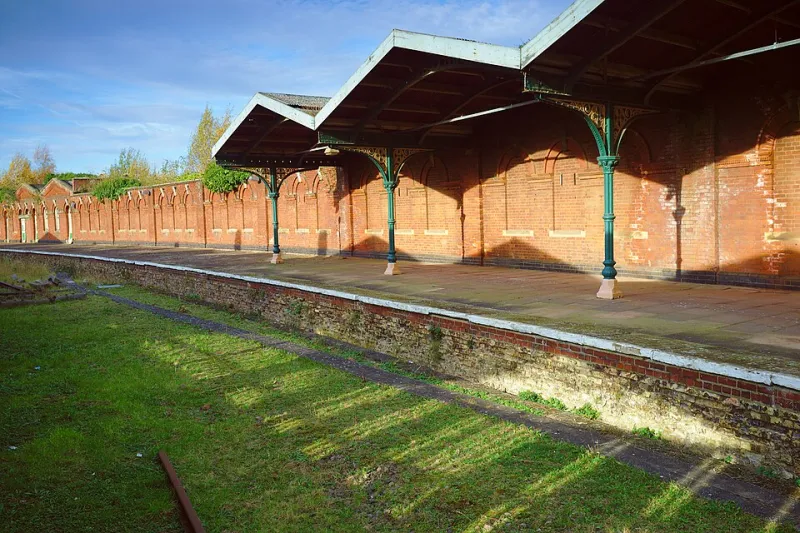
Photo: Lewis Collard, CC0, via Wikimedia Commons
Ask most people to name a heritage site and they will reach for a castle, a country house or a cathedral. Ask them to find a lost railway and the answer is usually a path they have walked without noticing: a straight lane behind the houses, a bridge with no river underneath, a cutting full of ferns. Britain is stitched with these lines. Many were branch railways built in the nineteenth century to serve market towns, quarries, mills and seaside resorts. When they closed - some before the Second World War, many more in the 1960s - they left behind platforms, goods sheds, station cottages and a shape in the landscape that is still legible if you know where to look.
For family historians, that is the useful part. A railway closure is rarely just an infrastructure story. It could mean a father's commute changed, a market town lost its link, a village shop lost its passing trade, or a son left for a city because the local goods yard no longer needed him. Walking a old trackbed is a way of reading those changes at ground level.
Begin with a timetable, not a trail
Before you lace up, find the ancestor. Start with the census returns from 1841 to 1921 and the 1939 Register, and note the address and occupation. Then look for the nearest station on an old Ordnance Survey map. The National Library of Scotland's map collection is excellent for this, and local record offices often hold railway plans, timetables and station photographs. A Bradshaw's guide from the right decade can tell you which trains ran, how often, and whether your ancestor could have reached work and home again in a day.
A station name can be a trap. The station might be a mile from the village it served, or named after a hamlet that has since been swallowed by a suburb. Compare the old map with the modern one. Plot a walk between two former stations on public rights of way, and carry both maps. The old map shows you what was there; the new one keeps you out of someone's back garden.
Six lines to walk slowly
Somerset & Dorset Railway, Somerset - The old Bath to Bournemouth line is now a patchwork of greenways and heritage track. Walk the Two Tunnels Greenway out of Bath or the Colliers Way near Radstock, then look for goods sheds and station cottages around Midsomer Norton. If your people were miners, coal merchants or dairy workers, this line explains how their produce and wages moved.
Midland & Great Northern Joint Railway, Norfolk - The M&GN threaded through north Norfolk villages and holiday towns before closing to passengers in 1959. Marriott's Way and quiet lanes follow parts of it near Reepham and Lenwade. Use a 1900s OS map to find the station site, then walk to the nearest churchyard: railway families often appear in both.
Elham Valley Line, Kent - The Elham Valley Way follows much of this closed line between Canterbury and Hythe. It is a gentle chalk-country walk through Barham, Elham and Lyminge, with bridge abutments and embankments still visible. For ancestors who worked in agriculture, hop gardens or domestic service, the railway was the difference between a weekly market and a day out.
Bishop's Castle Railway, Shropshire - This stubborn little line ran from Craven Arms to Bishop's Castle and never quite made its fortune. It closed in 1935. Public footpaths and lanes let you trace parts of the route; the old station area and embankments reward a slow look. It is a good line for families who stayed put in rural places but still felt the pull of the main line.
Lynton & Barnstaple Railway, Devon - The restored section at Woody Bay gives you the sight and sound of the old line, while public paths and lanes around Parracombe and Bratton Fleming let you walk the wider route. This was Exmoor's railway, carrying tourists, goods and workers. If your ancestors were in service, hospitality or small farming, the line's rise and fall shaped their chances.
Lanchester Valley Railway, County Durham - Now a popular railway path between Consett and Durham, this former line once served collieries and pit villages. Walk a section, then compare the old map with the modern housing estates and retail parks. For mining families, the railway was work, transport and sometimes the reason a village existed at all.
What to look for when the rails have gone
A platform edge is often the last obvious clue: a low stone lip beside a path, sometimes with a slice of asphalt still attached. Look for mileposts, bridge parapets, gateposts, goods sheds and the station master's house. A line of mature trees can mark an embankment. An unusually wide garden may be a former station forecourt. A pub called the Railway Arms is a clue worth following.
Take photographs, but take notes too. Write down what you can see from public ground, and what the old map says should be there. The gap between the two is often the story.
Walk with permission, and with context
Most old trackbeds are not open access land. Use public rights of way, and do not assume a path beside a railway bridge is a path over it. Closed lines can be private farmland, housing estates or wildlife corridors. Do not climb embankments, squeeze through fences or walk on live lines. A lost railway is not a playground.
The point of the walk
Railways reshaped family fortunes in quiet ways. They made it possible to commute, to move, to order goods from a catalogue, to send a daughter into service in the next town. They also made some places feel left behind when the trains stopped. Walking the route is a way of holding both truths at once.
You may not find a dramatic secret. You may find that your great-grandparents lived three streets from a station that no longer exists, and that the walk to it is now a path between hedges. That is enough. The rails have gone, but the route still has something to say.