The Proof of the Pudding: Six Edible Clues to a Family's Past
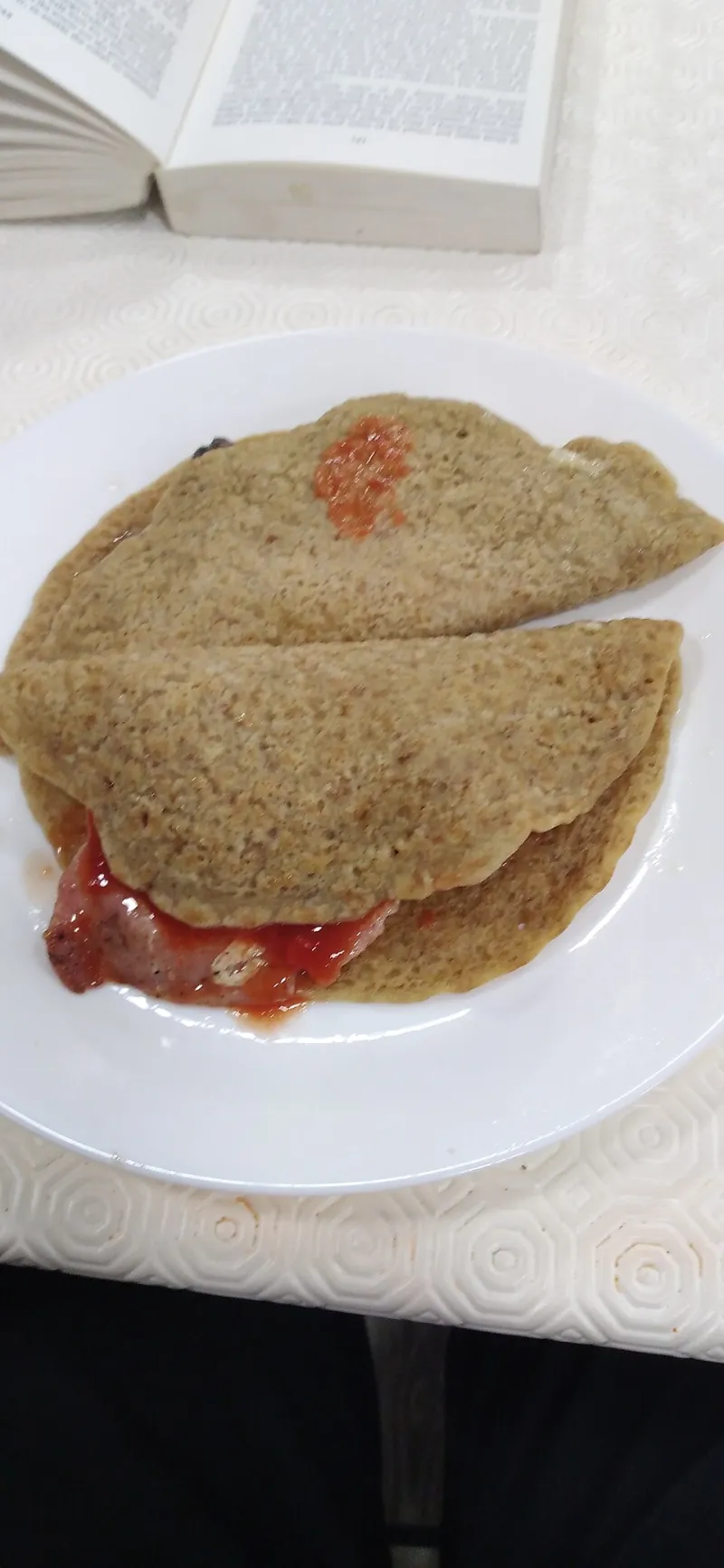
Photo: Rathfelder, CC0, via Wikimedia Commons
Family history usually turns up as paper: a census return in faint copperplate, a certificate with the ink gone brown, a photograph of somebody squinting in a back garden. But plenty of us begin somewhere far less tidy — with a dish. A pudding nobody can quite replicate. A pasty folded a certain way. A way of saying 'batter' that nobody else in the family uses.
That instinct is worth following. Food travels with people, and it leaves marks on landscapes: mills that ground the oats, harbours that smoked the fish, markets where a particular stall has been in the same spot for four generations. The trick is to treat a recipe as a lead rather than a conclusion. It can point you in a direction. It cannot sign a confession.
Here are six places where an edible clue is worth a day out, plus a few notes on where food memories stop being evidence.
Bakewell, Derbyshire: the pudding that argues with itself
Start with the famous one, because it teaches the lesson best. The Bakewell pudding and the Bakewell tart are different creatures, the town's origin story involves a confused innkeeper and a misunderstanding about egg mixture, and the tale has been retold so often that it now functions as local scripture. Whether or not the accident happened is beside the point for a family historian. What matters is that food legends attach themselves to places and then harden.
Walk the town anyway. The Old House Museum on Cunningham Place holds local domestic material, and the pudding shops are a useful reminder that a commercial version of a family dish is not the same as the family dish.
Redruth and Pendeen, Cornwall: the pasty as a shift record
A Cornish pasty is, functionally, a packed lunch designed by people who could not leave their post. The crimped edge gave a miner something to hold with dirty hands; the filling had to survive a shift underground. If your people were in Cornish mining, the pasty is less a recipe than a job description.
Kresen Kernow in Redruth holds the county's archives, and Geevor Tin Mine near Pendeen shows what the working day actually looked like. Look for the migrations in the records — Cornish miners went to the Americas, to South Africa, to the north of England — and then ask what happened to the pastry in those places. The adaptations are the interesting part.
Stoke-on-Trent: oatcakes and the six o'clock start
Staffordshire oatcakes are savoury, oaty, soft, and largely unknown twenty miles outside the Potteries. They make sense once you know the shift patterns: something quick, cheap and hot before a kiln or a factory. If an ancestor appears in the censuses as a potter, a dipper or a plate-maker, an oatcake is a fair proxy for the rhythm of their week.
The Potteries Museum & Art Gallery in Hanley covers the industry, and Middleport Pottery still shows the processes. Stoke's indoor market is the place to eat the thing itself. Then take the occupational details you have gathered and go looking for the works records and trade directories that name the actual firm.
The south Wales valleys: bara brith on a chapel table
Bara brith — a fruit loaf, often soaked in tea — sits at the junction of the kitchen and the chapel. In the coalfield communities it turns up at every funeral tea and every Sunday school trip. Welsh cakes, cooked on a flat griddle, do a similar job.
Glamorgan Archives in Cardiff and Big Pit at Blaenavon give you the industrial and the domestic sides of that world. If your family moved out of the valleys to English cities, look for the Welsh dairy shops and cafés that migrants ran — a food business is often easier to trace than a labourer's movements.
Leeds and the West Riding: parkin and the mill bell
Parkin is a sticky, dark, oat-and-treacle cake associated with November and, more broadly, with a part of the country that ate a lot of oats because wheat was expensive. In a mill town it also fits neatly into a working day built around bells.
West Yorkshire Archive Service in Leeds holds mill and business collections, and the Thackray Museum of Medicine on Beckett Street is unexpectedly good on the ordinary business of living and working in the city. It is worth reading a recipe for parkin alongside a mill wage book and noticing how little either of them says about the other.
Arbroath, Angus: smoke, salt and the herring girls
The Arbroath smokie is a haddock, salted and hot-smoked in a barrel. The technique is old, the trade was enormous, and the workforce was often female and seasonal — the herring girls followed the fleet down the east coast, gutting and packing, before heading home.
Arbroath harbour and the smokehouses give you the place. Angus Archives in Forfar gives you the paper. If your family includes a fisher or a fish curer, this is a route into a trade that moved constantly and left few domestic traces.
What a recipe cannot prove
Now the necessary caution. A family recipe is an oral document, and oral documents drift. Ingredients get substituted and then the substitution becomes the tradition. A dish gets attached to a grandmother who may never have cooked it. Brand marketing quietly rewrites local food history, and nineteenth-century commercial invention has a habit of presenting itself as ancient custom.
None of which makes food useless. It makes it a starting point. Use the dish to generate a question — where did this oat variety come from, who sold it, what time of day was it eaten — and then go and answer the question in a record office.
Before you visit the archives
Most local record offices ask you to book, many want identification, and almost all prefer pencils to pens. Order documents in advance where you can, check opening hours before travelling, and photograph with permission. Census returns give you occupations; trade directories give you addresses; apprenticeship records, poor law papers and mill or mine collections give you the texture.
Bring the recipe with you. Write it out properly first — who gave it, when, what they changed — and treat that sheet as document number one in the file. Then see whether the paper agrees.