The Plan Was the Message: Six Workhouse Sites to Read Slowly
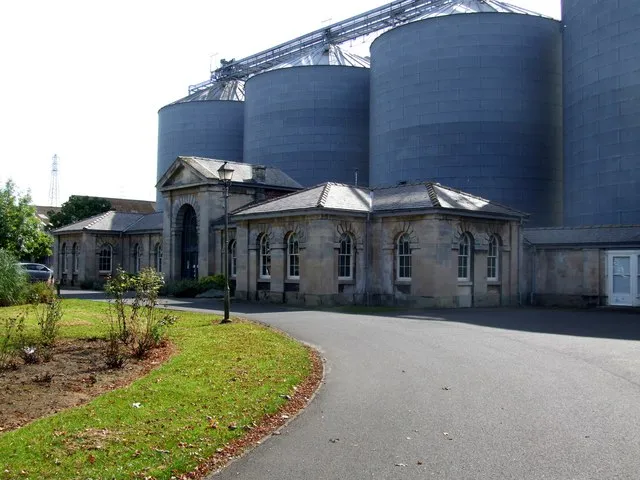
Photo: Dave Hitchborne, CC BY-SA 2.0, via Wikimedia Commons
Finding a workhouse admission in the family tree is a strange moment. You get a date, a name, sometimes an age and a parish. Then the record stops. What it rarely gives you is the room, the corridor, the sound of a gate closing. That is where the buildings come in — not as ghost stories, but as evidence.
Read the Building Before You Read the Register
Workhouse architecture was not accidental. The gatehouse marked the line between parish and institution. The master’s rooms often overlooked entrances and yards. Separate doorways and exercise yards sorted people by age, sex and circumstance. Boundary walls kept the town out as much as they kept people in. Once you know that, a plan drawing or a surviving wall starts to explain the admission book.
The surrounding streets matter too. Many workhouses sat on the edge of town, close enough to be useful and far enough to be discreet. Look for boundary stones, a lodge, a separate casual ward, an infirmary block. These are clues to how the union organised people — and where your ancestor might have been sent.
Six Sites Where the Fabric Survives
The Workhouse, Southwell, Nottinghamshire
The National Trust property at Southwell is the clearest place to see the New Poor Law plan in three dimensions. The gatehouse, separate yards and dormitories show how thoroughly the system sorted people. Stand at the entrance and look for the windows that gave staff a view of arrivals.
Pair it with: Nottinghamshire Archives in Nottingham for Southwell Union admission and discharge books, guardians’ minutes and medical records. Search the union name, not just the town.
Visit: Upton Road, Southwell. Historic interiors include uneven floors, narrow doorways and stairs; check the National Trust access statement and opening times before you go.
Gressenhall Farm and Workhouse, Norfolk
Gressenhall began as a House of Industry in the 1770s and later served the Mitford and Launditch Union. The site is a museum now, but the scale of the building still tells you what rural poverty looked like to the officials who ran it. Look for the later infirmary blocks and the way the farm sits alongside the wards.
Pair it with: Norfolk Record Office in Norwich for union records, creed registers and guardians’ minutes. The museum’s displays can help you decode what you find.
Visit: Gressenhall, near Dereham. Much of the site is accessible, but historic buildings have steps and uneven surfaces; check current access details.
Ripon Workhouse Museum, North Yorkshire
Ripon’s workhouse buildings include wards, a casual side and the kind of hard, practical spaces that records only hint at. The museum is good on the texture of daily life: the rules, the tasks, the separation. It is also a reminder that workhouses were not one thing — the casual ward, the infirmary and the able-bodied ward were different worlds.
Pair it with: North Yorkshire County Record Office in Northallerton for Ripon Union records, plus the museum’s own local archive.
Visit: Allhallowgate, Ripon. Expect stairs, uneven floors and narrow spaces in the historic buildings; check opening times and accessibility before travelling.
The Spike Heritage Centre, Guildford, Surrey
The Spike is a surviving casual ward, the part of the system that took people in for a night or two in exchange for work. Cells, a stone-breaking yard and the separate entrance make the routine painfully legible. It is a useful corrective to the idea that every workhouse inmate was a long-term resident.
Pair it with: Surrey History Centre in Woking for Guildford Union casual ward records, admission registers and guardians’ minutes.
Visit: Warren Road, Guildford. Tours are guided, and the building has narrow stairs, low doorways and cells; it is not fully accessible, so check before booking.
Llanfyllin Workhouse, Powys
Llanfyllin’s workhouse survives as a substantial building, now run as an arts centre. The main range gives you the shape of a rural Welsh union, where distances were long and the workhouse was often the only institutional option. Look at the boundary and the approach: the building was meant to be seen, but not too closely.
Pair it with: Powys Archives in Llandrindod Wells for Llanfyllin Union records. The National Library of Wales in Aberystwyth is useful for wider poor-law material.
Visit: Y Dolydd, Llanfyllin. Opening varies with the arts centre’s programme; check access and event times before you travel.
Clifton House, Belfast
Clifton House is older than the New Poor Law. It opened as the Belfast Poor House in the 1770s and survives as a rare example of the earlier charitable model. It is not a workhouse in the 1834 sense, but it is part of the same long story of institutional relief — and it shows how a building can carry civic pride and control in the same breath.
Pair it with: the Public Record Office of Northern Ireland in Belfast for poor-house and related institutional records.
Visit: Clifton House, Belfast. Guided tours run regularly; the historic building has stairs and limited access in places, so check ahead.
Pair the Place With the Paper
The most useful records are usually admission and discharge books, creed registers, guardians’ minutes, master’s journals, medical officer reports and birth or death entries. Not all survive for every union. If the record you want is missing, ask what else exists: removal orders, settlement examinations, vaccination registers, school records, chapel registers.
Always search the union name as well as the town. Workhouses served wide areas, and your ancestor may have been admitted far from the village where you last found them.
A Short Ethical Guide to Reading Institutional Records
Treat the people in the records as people. Use person-first language where you can: your ancestor was admitted to the workhouse, rather than being defined by the institution. Quote historical terms when you need to, but do not let them become the whole description.
Remember that these records were written by officials. They tell you what staff thought mattered: age, parish, ability to work, health, behaviour. They can be blunt, dismissive or simply wrong. Read them alongside family context and other sources rather than treating a single entry as a verdict.
Avoid turning suffering into spectacle. Workhouse tourism can easily slide into shock, and shock rarely helps you understand a family. Do not photograph burial grounds or living relatives without care. If you are visiting with children, prepare them: the story is hard, but it is not a horror show.
Before You Go
Historic sites often close seasonally, and small museums run limited hours. Check access statements rather than assuming step-free routes. Archives usually need documents ordered in advance, and many require ID and a pencil. Take notes, ask staff what they know, and leave time for a walk around the outside of the building. Sometimes the most useful view is the one from the street.
The building was never the whole story. But standing where a gatehouse once stood can turn a line in a register into a place. Handle that place with care.