What the Beam Remembers: Six Timber-Framed Houses to Read with a Torch and a Notebook
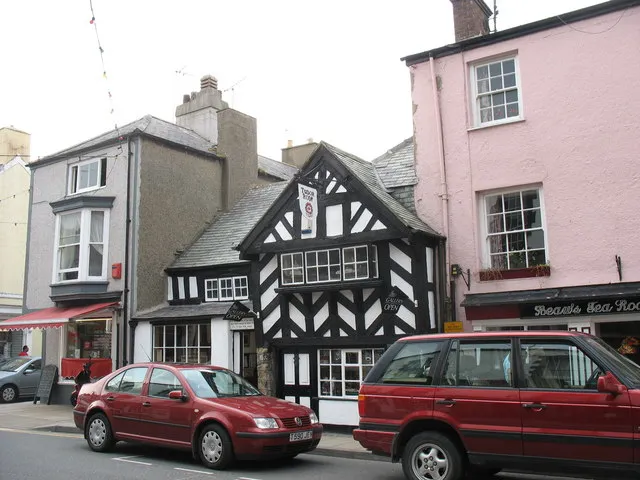
Photo: Eric Jones, CC BY-SA 2.0, via Wikimedia Commons
Old timber is not silent. It is just speaking in a vocabulary most of us were never taught. A beam in a Tudor hall might carry a row of chisel cuts put there by the joiner who fitted it, a daisy wheel scratched near a doorway to keep something out, or a pair of initials carved by someone who sat in the same room three centuries later. For family historians, these marks are tempting: they feel personal, immediate and almost like a signature. They are rarely that simple, but they are still worth reading.
The marks are not all signatures
Start by separating the main types of mark you will see in a timber-framed building. Carpenters' marks are working marks, usually scratched or chiselled onto timbers so that joints cut in a yard could be matched up on site. They often look like Roman numerals, simple lines or tally marks. They can tell you how a frame was put together and sometimes how it was repaired, but they do not name the carpenter.
Apotropaic marks, sometimes called witch marks, are protective symbols. You might find daisy wheels, overlapping V shapes, or scorch marks near doors, windows and fireplaces. They were intended to guard the building and the people in it. They are fascinating evidence of belief and anxiety, but they are not personal signatures and they do not prove that a particular ancestor lived there.
Then there is graffiti: initials, dates, names and small drawings scratched into beams, plaster or window glass. This is the category most likely to make a family historian's pulse quicken. It is also the one that needs the most caution. A date might be original, or it might have been added by a Victorian visitor with a penknife. Initials might belong to an occupant, a servant, a craftsman or a day-tripper. Without a documentary link, they are a prompt for research rather than proof of identity.
Finally, there are the marks left by repair: reused timbers, numbered replacement beams, carpenter's stamps from later work. These are the building's own paper trail, and they can be just as revealing as a name.
Six frames worth a slow look
Little Moreton Hall, Cheshire. This is the timber-framed house people draw from memory: crooked, black-and-white and gloriously overdone. It is a National Trust property and very accessible. Look closely at the beams and doorways, and ask staff about the carpenters' marks and protective marks that survive around the building. The house is a good place to learn the difference between a construction mark and a later scratch.
Speke Hall, Liverpool. On the edge of the city, Speke Hall gives you Tudor timber, later additions and a long family history in one visit. The frame rewards close looking, especially around openings and service areas. Ask about marks that have been recorded by conservators; some are subtle enough to miss unless you know where to look.
Paycocke's House, Coggeshall, Essex. Built for the wool merchant Thomas Paycocke, this house wears its merchant ambition in carved woodwork and confident show. Look for initials and carved detail, but treat them as part of a family's self-presentation rather than a signed confession. The house is a useful reminder that a name in wood usually belongs to a story about status, trade and memory, not just genealogy.
Lavenham Guildhall, Suffolk. Lavenham is a wool-town stage set, and the Guildhall is one of its most rewarding timber buildings. The frame is complex, the rooms are layered, and the marks are not always obvious. Go slowly, use the light where you can, and ask the room stewards what has been found during conservation. Small marks often live at eye level or below, where hands and tools have brushed the wood.
Bayleaf at the Weald & Downland Living Museum, West Sussex. Bayleaf is a medieval hall house, relocated and rebuilt at the museum, and it is one of the best places in Britain to learn how carpenters' marks work. Because the frame is exposed and interpreted, you can see how timbers were numbered and fitted. It is less about finding a family name and more about understanding the hands that raised the building.
Anne of Cleves House, Lewes, East Sussex. The name gets the attention, but the building itself is the draw: a timber-framed house with a long, complicated life. Look at the beams, the later partitions and the small graffiti that accumulates in old buildings. Ask about recorded marks and keep your expectations modest. A house like this is a document with many authors.
How to read a mark without overclaiming
Take photographs where photography is allowed, and use a torch at a low angle to pick out scratches in the grain. Note exactly where the mark is: which room, which beam, which face, how high from the floor. A mark near a doorway means something different from one under a windowsill or on a service stair. Record it in your notes with the date and the property, and ask staff whether the mark has been surveyed or interpreted. Conservation teams often keep records that are not on the visitor route.
Be equally careful with names. If you find initials that match an ancestor, the next step is documentary, not romantic. Check parish registers, wills, inventories, manorial records, tax lists and deeds for someone with those initials in that house or street. A dated beam can sometimes be tied to a building campaign, and dendrochronology can date timbers with real precision, but neither will hand you a family tree. The mark gives you a question; the archive gives you the answer, or tells you that the question is still open.
Take the research home
If your ancestor was a carpenter, joiner, sawyer or builder, the timber frame is only the beginning. County record offices hold apprenticeship records, wills and inventories that can name tools, timber and workshops. Local studies libraries may have photographs of the building before restoration. Historic England listings and conservation reports can describe marks that are hard to see on a visit. The pleasure of these houses is that they let you stand where the work happened. The discipline is remembering that the wood remembers a hand, not always a name.