Clocking On: Six Mill Towns That Still Keep Your Ancestors' Hours
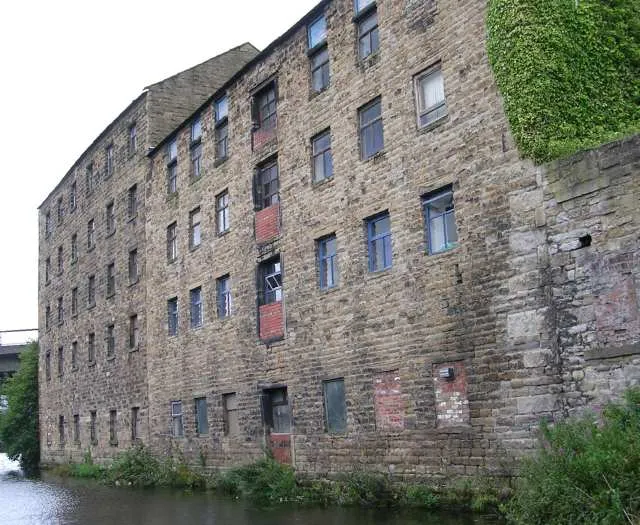
Photo: Betty Longbottom, CC BY-SA 2.0, via Wikimedia Commons
The factory horn has gone from most British skylines, but the shape of the working day it created is still there. You can see it in the straight walk from terraced street to mill gate, in the chapels and co-op stores built a few minutes from the shed, and in the school logbooks that noted when children were kept home for the mill.
If your ancestors were weavers, piecers, carders or tacklers, a heritage day out can become something more focused than a general tour of industrial Britain. You are not just looking at machines. You are trying to reconstruct a timetable: when someone left the house, who minded the children, where wages were collected, and what happened when the whistle did not blow.
Start with the sound, not the stone
Most mill sites now greet visitors with interpretation boards and café menus. That is fine, but begin outside. Stand where a worker would have walked in and look for the ordinary furniture of a working life: a factory wall, a narrow pavement, a pub on the corner, a chapel set back from the road. The route between home and gate is often the most revealing part of the day.
Take a notebook and record three things at each stop: the time you would have started, the street name, and any occupation written on a nearby plaque or gravestone. Those small details are prompts for the record office, not proof on their own.
Bolton: the gate, the row and the card room
Bolton is a good place to begin because the textile trade left so many different marks. Walk from the town centre towards the older industrial streets and look for the pattern of back-to-back terraces, corner shops and large mill buildings. The names on the streets often point to families who built or worked in the trade.
At Bolton Museum and local studies library, ask about census returns for streets you have walked. Look for occupations such as cotton piecer, card room hand, spinner or weaver. Then widen the search: accident reports in local newspapers, school attendance records, and any surviving wage books or company records held by the archive. A single entry for a mill worker can tell you the street, the employer and sometimes the exact job.
Burnley: weaving sheds and the school bell
Burnley rewards a slow walk around the older weaving districts. The terraces are tight, the pavements are narrow, and the mills sit close enough that the old shift rhythm is easy to imagine. Look for the remains of weaving sheds and the solid, practical buildings that grew around them.
In the archive, school logbooks are especially useful. They often record absences caused by mill work, illness or family need. Combine those entries with census occupations and trade directories. If a child disappears from the school register at twelve or thirteen, the mill record may explain why. Lancashire Archives and Burnley's local studies collection are sensible starting points; check opening hours before you travel.
Halifax: Piece Hall and the climb to work
The Piece Hall is the obvious landmark, but the more interesting walk is the one between the market, the chapel and the mill. Halifax's textile history was not only about huge factories. It was also about small masters, cloth halls and families who combined weaving with other work.
At Calderdale Archives, look for poor law records, apprenticeship papers and newspaper reports as well as census returns. If an ancestor moved between the cloth trade and the poor law, the records can show how quickly a working day could turn into a crisis. Walk the slope between the town centre and the older industrial streets and note how much effort the commute itself required.
Huddersfield: coloured cloth and the dinner bell
Huddersfield's reputation for fine cloth gives you a different angle. Instead of chasing the biggest mill, look for the smaller works and the streets where skilled workers lived. The Colne Valley and the older textile districts around the town are good for this. A short walk can take you past chapels, works buildings and terraces that were built for people who expected to be at their post when the bell rang.
In Huddersfield Local Studies, search trade directories for the firm names you see on buildings. Then look for the same surnames in census returns. If your family were dyers, finishers or pattern weavers, the records may be more specialised than the general mill returns. Local newspapers are useful for accidents, strikes and wage disputes.
Rochdale: co-operation and the six o'clock start
Rochdale is closely associated with the co-operative movement, and that matters for family history. The co-op was not just a shop. It was a savings scheme, a social club and sometimes an employer. A family's membership records can sit alongside mill work and chapel attendance as part of the same working life.
Walk from the Pioneers Museum area into the older streets and look for the practical geography of the town: the store, the mill, the school and the pub. At Rochdale Local Studies, ask about co-op membership records, trade directories, census returns and school logbooks. If you find a mill wage book, read the columns for fines as well as pay. They show how a working day was policed.
Dundee: jute, jam and the shift siren
Dundee offers a Scottish counterpoint. The jute mills shaped the city's streets and its working hours, and the Verdant Works is a useful place to start before walking the surrounding streets. Look for the tall mill buildings and the dense housing that grew up around them.
At Dundee City Archives, try valuation rolls, census returns, trade directories and school records. Employment records for large mills can be patchy, so newspapers and accident reports often fill the gaps. If your family worked in jute, look for job titles such as preparer, spinner or weaver, then check whether the same address appears across several census years.
Read the street like a timecard
At each town, use the same simple method. First, walk the route from a likely home street to a likely workplace. Second, note the names and occupations you see on plaques, gravestones and shopfronts. Third, take those names to the local archive and search census returns, directories, wage books, accident reports and school logbooks.
You will not always find a dramatic story. Often you will find something quieter: a family that lived within sight of the mill, a child who started work young, a wage book with a familiar surname in a column of fines. That is still a working day recovered.
Practical notes
Wear comfortable shoes and allow time to stand still. Many local studies libraries and record offices need an appointment or have limited opening hours, so check before travelling. Take a pencil, a notebook and a phone for photographs of street names, but do not trespass on private mill sites. If you find a record that changes your family story, write down the reference number immediately. Future you will be grateful.