Six Quiet Archives: Reading British Burial Grounds for Family Clues
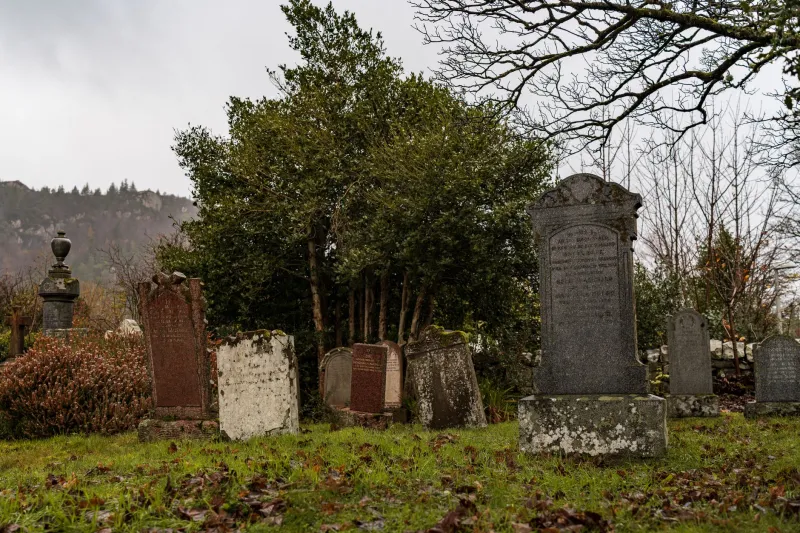
Cemeteries are not just places where names and dates stack up. They are maps of belief. The layout tells you who was allowed where. The stone tells you what a family could afford. The inscription tells you what language they prayed in, and the symbols tell you what they hoped would survive them. If you are tracing roots, a burial ground can answer questions a census return never asks: where a family worshipped, whether they dissented, how they buried their dead and which community they trusted with the paperwork.
This is not a guide to famous graves. It is a guide to reading six very different British burial grounds as family evidence. Take a notebook, check opening times before you travel and treat every stone as someone's ancestor rather than a puzzle piece.
Start with the ground plan
Before you read a single inscription, stand back. Are the graves in neat rows or crowded together? Is there a walled section, a separate gate or a patch reserved for one group? Are the stones uniform or wildly varied? In a Quaker burial ground, plainness is the point. In a Victorian garden cemetery, display is the point. In a Jewish cemetery, the burial society and the Hebrew inscription may matter more than the English line. The ground plan often tells you more about belonging than the biggest monument in the place.
1. Jordans Friends Burial Ground, Buckinghamshire
Jordans is a Quaker site, and its burial ground is a lesson in restraint. You will not find soaring angels or boastful obelisks. You will find low stones, even rows and a sense of equality held in stone. That plainness is not a lack of information. It is a clue to dissent. Quaker families often kept their own meeting records, and those minutes can explain why an ancestor is missing from parish registers or why a family moved between counties.
Local story: the Penn family connection draws visitors, but the quieter lesson is in the ordinary rows. Chiltern farming families buried here were part of a network of meetings, not just parishes. If your ancestor disappears from one place and turns up in another, a Quaker removal certificate may be the missing link.
Follow-up: start with Friends House Library in London and the local county record office. Ask for meeting minutes, burial notes and removal certificates. The plain stone may give you a name; the minute book gives you a reason.
2. Brady Street Cemetery, Whitechapel
In the old Jewish East End, Brady Street Cemetery is a dense, atmospheric reminder that migration is rarely a single story. Hebrew lettering, English additions, crowded plots and the names of burial societies all point to a community organised through synagogues, friendly societies and trade networks. A stone may name a person, but the plot may name the society that buried them. That is family history with paperwork attached.
Local story: a single grave can carry a trade, a Hebrew name and a street that no longer looks the same. For families who arrived in London from eastern Europe, the cemetery is often the first place where an English address and a remembered Old World name sit side by side.
Follow-up: contact the cemetery office before visiting, and check the Jewish Genealogical Society of Great Britain and London Metropolitan Archives. Burial society records can be as useful as the stone itself. Visitors may be asked to cover their heads, and you should follow any instructions on site.
3. Undercliffe Cemetery, Bradford
Undercliffe is a Victorian garden cemetery with a view and a swagger. Terraces, curving paths and grand monuments were designed to be seen. For family historians, that theatricality is useful. A merchant's tomb was a CV in stone: it said what the family had built, what they believed in and how much they wanted the town to notice. Nonconformist and Anglican sections, family plots and civic monuments all map a Victorian city's social geography.
Local story: Bradford's wool trade made fortunes, and Undercliffe let those fortunes announce themselves. Look at the symbols: urns, ivy, broken columns, draped urns. They are not random decoration. They are a language of mourning and status, and they can help you place a family in a particular layer of local society.
Follow-up: Bradford Archives and the cemetery's own records are the places to start. Check burial registers, plot books and newspaper notices. A grand monument without a paper trail is a lead, not a conclusion.
4. Wainsgate Chapel Burial Ground, Wadsworth
High on the Pennine hills above Hebden Bridge, Wainsgate feels like a place where weather and belief shaped each other. The chapel and its burial ground belong to a rural nonconformist world of long walks, tight families and meeting records kept far from the parish church. Simple stones, sloping ground and recurring local surnames tell you that this was a community of farmers and weavers, not visitors.
Local story: the burial ground holds families whose names repeat across the same few hamlets. That repetition is a gift. It lets you build a cluster of related households and then test it against chapel records, wills and land documents. If your ancestor was a Baptist or Independent in this part of Yorkshire, the parish register may be only half the story.
Follow-up: try West Yorkshire Archive Service and the chapel's own records. Look for membership lists, chapel histories and burial account books. Nonconformist records can be patchy, but when they survive they explain the gaps.
5. Ford Roman Catholic Cemetery, Liverpool
Liverpool's Catholic cemeteries are migration archives as much as burial grounds. Ford Cemetery, opened in the Victorian period, holds generations of Irish Liverpool families, and its stones often carry more than a name. A crucifix, a rosary, an IHS monogram or a line in memory of a family left behind can point you back across the Irish Sea. Plot size and monument style also tell you something about money, parish and status.
Local story: a family tombstone may name a parish in Ireland that no census return ever recorded. That single line can redirect your research from a Liverpool street to a county archive. It is one of the most practical reasons to read a Catholic cemetery slowly rather than photographing the first familiar surname and leaving.
Follow-up: Liverpool Record Office holds cemetery and parish material, and local Catholic parish registers may fill in the gaps. Check burial registers for the officiating priest and the family's stated address. Those details can separate two families with the same name.
6. Kilmuir Cemetery, Skye
Kilmuir is exposed, beautiful and full of weather. Flora MacDonald's grave draws the coach parties, but the wider burial ground is a map of crofting families, Gaelic memory and island belonging. Stones are often simple, inscriptions may be worn, and the setting itself tells you that this was a place of small communities rather than grand civic display. Look for family plots, repeated given names and memorials that name a township rather than a street.
Local story: in the Highlands and islands, a grave can tie a family to a township, a church and a way of life that disappeared with clearances, emigration and changes in land use. The stone may be modest, but the place-name on it can be the most valuable word in the inscription.
Follow-up: the Highland Archive Centre in Inverness is the place to begin, alongside local church records and cemetery plans. Check monumental inscriptions and local history society publications. Do not rely on a weathered stone alone; photograph it, note the location and compare it with the written record.
Visiting without trampling the story
Do not lean on stones, do not rub them and do not remove anything, including small stones left by other visitors. Some cemeteries are still active places of burial, so keep your voice low and give mourners space. Check opening times and access before you travel. In Jewish cemeteries, follow signage about head covering and photography. In Quaker burial grounds, keep the quiet. In rural sites, close gates and stick to paths. A cemetery is not a ruin; it is a place where people still belong.
Follow the paper trail home
A gravestone is a starting point, not a full biography. Photograph the whole stone, the neighbouring stones and the wider plot. Note the section, row and any nearby landmark. Then go to the record office. Ask for burial registers, plot books, meeting minutes, burial society records, parish registers and cemetery plans. Compare the stone with the paper. If they disagree, the disagreement is often the most interesting part of the story.
The best cemetery visits end somewhere else: in a search room, with a map, a minute book and a family that suddenly makes more sense.