Where the Water Went, the Family Followed: Six Towpath Walks With an Archive at the End
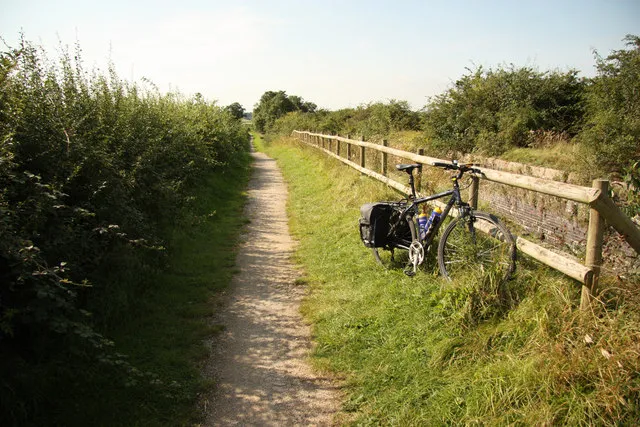
Photo: Richard Croft , CC BY-SA 2.0, via Wikimedia Commons
There is a particular stillness on a towpath in November. The water is the colour of weak tea, the hedges have gone see-through, and somewhere ahead a lock paddle is clanking. It is easy to walk a canal and think of it as scenery. It is harder, and much more interesting, to walk it as a road — because for roughly a century and a half, that is exactly what it was for a great many British families.
If your ancestors moved goods, they very likely moved them on water. And water, usefully for us, was bureaucratic.
Why the cut leaves such a good paper trail
Canal companies were obsessive record-keepers. Tolls had to be charged, wharfage collected, cargoes logged, committees minuted. Lock-keepers kept daily books: boat name, master's name, cargo, tonnage, direction, time through the lock. For a boatman ancestor with no fixed address, a lock-keeper's log can be the closest thing to a diary entry that survives.
Boat families also turn up in the census in odd ways — enumerated at a wharf, at a bridge, occasionally simply "on the canal". Baptisms cluster in canal-side parishes. And because so many of these people were itinerant, the records are scattered: some in county record offices, some in the Waterways Archive, some in the local museum that inherited a boatyard's paperwork.
That is the logic behind this list. Each walk is short enough for a winter afternoon, and each ends within reach of somewhere you can go and look things up.
1. Foxton and the Harborough Arm, Leicestershire
The famous flight of ten locks is the draw, but walk south along the arm towards Market Harborough — about five miles — and you get the quieter version: a contour-hugging cut, old wharf cottages, and the earthworks of the inclined plane that ran from 1900 to 1911.
Look for the side ponds, which explain how the flight was meant to save water, and the boatyard site at Foxton, which built and repaired working boats. The Foxton Canal Museum holds local material; for company and boats, head to the Leicestershire, Leicester and Rutland Record Office at Wigston.
2. Bradford-on-Avon to Bath, Kennet & Avon
Around nine miles of proper stone-and-viaduct canal, including the Avoncliff and Dundas aqueducts. If your people were cloth workers, millers or coal heavers, this stretch is a whole economy in one walk.
Give yourself time at Dundas, where the Somerset Coal Canal once met the Kennet & Avon — a junction is always a good place to look for family names in the landscape. Archives: the Wiltshire and Swindon History Centre at Chippenham, and Bath Record Office for the city end.
3. Skipton to Gargrave, Leeds & Liverpool
Five flat, beautifully engineered miles along the Springs Branch and the main line, with the Pennines doing the drama. The Leeds & Liverpool was a coal and limestone canal, and the surnames of quarry families recur in the parish registers along its length.
Worth knowing: Bingley's five-rise staircase is a short hop east if you want the full spectacle. For records, try the North Yorkshire County Record Office at Northallerton and the Craven Museum in Skipton for local and photographic material.
4. Middlewich to Wheelock, Trent & Mersey
About five miles of the old salt and cheese route — Middlewich's brine workings on one side, the Weaver valley on the other, and the handsome paired locks at Wheelock at the end. Salt boats and cheese boats were the everyday traffic, and the towns were full of families whose trade was loading, weighing and carting.
Nearby archives: Cheshire Archives and Local Studies at Chester, and Staffordshire Archives at Stafford.
5. Ellesmere and the Meres, Shropshire
The Llangollen Canal through the meres and mosses is the most atmospheric stretch on this list — reed beds, black water, and a wharf that still feels like a place people worked. Walk out towards Frankton Junction, where the Montgomery Canal branches off, and you are walking a junction of two migration routes at once.
Shropshire Archives at Shrewsbury is the place to start; Ellesmere's own heritage displays cover the wharf and the town's canal trade.
6. Brighouse to Cooper Bridge, Calder & Hebble
Industrial canal at its most legible: mill after mill, a river alongside, and water that once carried coal to the dye works. The navigation is old — early eighteenth century — and the lock gear is a reminder of how labour-intensive a "simple" journey was.
West Yorkshire Archive Service at Wakefield and the Calderdale archives in Halifax both hold relevant collections; the local studies libraries are strong on trade directories, which will tell you who was running the wharf in a given year.
Before you set out
Boots, not trainers — towpaths are muddy long after the rain stops. Check the Canal & River Trust's stoppage and towpath notices, because winter works close stretches without much warning. Take an OS Explorer map rather than relying on your phone in a cutting. And pick a walk with a pub at the halfway point, because that is what your ancestors would have done.
What to take to the archive
Book a table in advance, take a pencil (most search rooms still insist on it), and arrive with a name, an approximate date and a place. Ask specifically for canal company records, boat registers and wharf plans, and tell the archivist you are following a family rather than a company — it changes what they suggest. Two hours is a realistic first visit.
And if you find nothing? Walk the stretch again. Half the value of these routes is that they make a plausible story visible: the wharf your family loaded at, the bridge they sheltered under, the church where a boat child was baptised between trips. The paperwork may be thin. The geography is generous.