Reading the Background: Turning a Nameless Family Snapshot into a Street You Can Walk
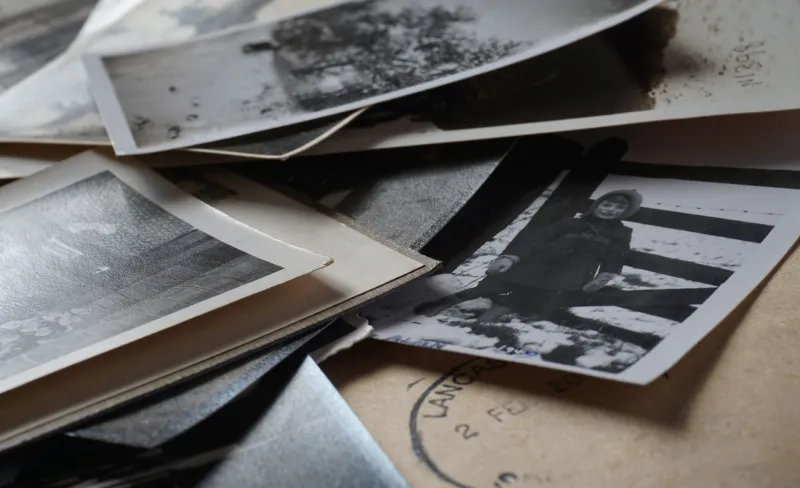
Most family photographs are kept for the faces. The place slips to the edge: a shop sign half out of frame, a row of railings, a doorway that does not quite match anywhere you know. That is where the hunt begins.
A nameless snapshot is not automatically a lost cause. In 2026, digitised maps, local studies libraries and photographic collections make it possible to turn a background detail into a street, a suburb, even a specific doorway. The trick is to stop looking at the people first and start reading the built world around them.
Start With the Edges, Not the Faces
Scan the photograph at the highest resolution you have. Then work around the margins. Note door numbers, shop fascias, painted wall adverts, pub tiles, window patterns, chimney stacks, railings, kerbstones, setts, lamp standards, post boxes and road signs. A single detail is rarely enough. A cluster of them can be decisive.
Compare what you see with old Ordnance Survey maps, trade directories and local photograph collections. Do not expect an exact match straight away. Streets get renumbered, shopfronts are replaced, railings are removed for war effort, and paint schemes change with fashion. Look for the stubborn things: brick bonds, stone margins, roof pitches, the width of an entry, the line of a kerb.
Chester: Follow the Rows
If your photograph shows a shop at ground level and a walkway above it, with railings or a balustrade at first-floor height, Chester should be near the top of your list. The Rows — the historic two-level galleries along streets such as Bridge Street and Watergate Street — are unusually legible in old photographs. Look for timber framing, carved brackets, cellar hatches and the rhythm of the gallery openings.
Start with Cheshire Archives and Local Studies and the city's old Ordnance Survey sheets. Then walk Bridge Street towards Watergate Street and compare the gallery line, not just the shopfronts. Shop names will have gone; the structure may not have.
Brighton: North Laine's Painted Fronts
The North Laine area, around Gardner Street and Kensington Gardens, is full of small terraces and shopfronts that have been repainted many times. Colour is a poor clue. Better ones are pilasters, fascia brackets, sash windows, mosaic doorsteps and the surviving pattern of narrow back streets.
Brighton History Centre at Jubilee Library holds local photographs and directories. Use them to check street numbering and old business names. Then visit on a weekday morning, when the shopfronts are less crowded, and look above the modern signs. The upper floors often tell the older story.
Leeds: Kirkgate and the Commercial Backbone
Kirkgate in Leeds is a good place to test a photograph of a busy commercial street. Look for tiled pub fronts, warehouse windows, carved stone lettering and the line of the pavement. The area around Kirkgate Market has been altered, but the street's commercial grain survives in patches.
The Leeds Local and Family History Library, together with the Leodis photographic archive, can help you compare building heights and shopfront rhythms. If your snapshot includes a tram standard, an old lamp or a particular style of kerb, note it. Street furniture is often dated more precisely than the buildings behind it.
Glasgow: Merchant City Warehouse Windows
In Glasgow's Merchant City, streets such as Virginia Street and Miller Street still carry the look of the tobacco and textile warehouses. Large industrial windows, iron columns, hoists and cobbled surfaces are the clues. If your photograph shows a tall, plain frontage with unusually big windows at each floor, you may be looking at warehouse rather than domestic architecture.
Glasgow City Archives at the Mitchell Library holds valuation rolls, maps and photographs. Check the street line and the warehouse openings before you go. A ghost sign — the faint painted lettering on brick — is a bonus, but not a requirement.
Belfast: Cathedral Quarter Entries
The Cathedral Quarter, around Hill Street and Commercial Court, has narrow entries, red brick warehouses and setts that appear in older photographs. Look at the width of an entry, the stone kerb around it and the way a building turns a corner. These are harder to change than a shop sign.
Belfast Central Library and the Public Record Office of Northern Ireland can help with directories and maps. Compare your photograph with old street views, then walk the entries slowly. Do not assume every dark passage is the one in the picture; check the brickwork and the roofline.
Cardiff: The Arcades
If the photograph shows an indoor street with a glazed roof, tiled floor and a run of small shopfronts, Cardiff's arcades are a strong possibility. Castle Arcade and High Street Arcade have distinctive thresholds, stallrisers and roof structures. Look at the tile patterns and the shape of the shopfront openings.
Glamorgan Archives and Cardiff Central Library hold local photographs and maps. Arcades are also useful because their enclosed nature preserves older frontages. A modern shop name may sit inside a much older frame.
Pack a Short Archive Kit
Take a printed copy of the photograph, a magnifier, a notebook and a phone for maps. Check opening hours before travelling. Ask for Ordnance Survey maps, trade directories and local photographic collections. Be polite about private property: a street is public, a doorway is not. Photograph from the pavement and ask before entering any building.
Above all, treat the photograph as a set of clues rather than a verdict. You may not find the exact doorway. You may find the street, the terrace or the corner — and that is enough to turn a nameless image into a place to visit.
In 2026, that is a very good sort of heritage day out: a printed snapshot in your pocket, a map on your phone, and a street ahead of you that your family once stood on without leaving a caption.